What to Do With Your Pet's Ashes: Ideas for Keeping, Scattering and Memorializing
In this article
- First, a few facts that help
- Option 1: Keep them at home
- Option 2: Scatter them somewhere meaningful
- Option 3: Bury them
- Option 4: Keep a small portion in jewelry or keepsakes
- Option 5: Turn them into art or another memorial object
- Option 6: Share them, or divide them
- Option 7: Keep them with you for later
- Questions to ask yourself
- What about the cost?
- If you feel stuck or sad when you see the box
- There is no wrong choice
When you bring your pet home after cremation, the small box or urn can feel strangely heavy. Many people are surprised to find they do not know what to do next. Should you keep the ashes? Scatter them? Bury them? Is there a "right" thing?
There is not. There is only what feels right for you, and there is no deadline. Some people keep ashes on a shelf for years before deciding. Others know right away. This guide walks through your options, with practical notes so you can choose without regret.
First, a few facts that help
What you receive depends on the type of cremation. Pet cremation is commonly offered as private or individual (your pet alone, so the ashes returned are your pet's), partitioned (several pets cremated at the same time but separated) or communal (pets cremated together, and ashes usually not returned). If you are not sure which you chose, ask the crematory or your veterinarian's office. They can also tell you what to expect about the amount returned, which varies with the size of the pet.
Ashes are not like wood ash. Cremated remains are mostly processed bone mineral. They are not harmful to handle, and they are not like fireplace ash. They are, however, dry, heavy and quite fine, so scattering or transferring them can be messier than expected, especially on a windy day.
You are allowed to take your time. Keeping the box in a quiet corner while you decide is a perfectly good choice.
Option 1: Keep them at home
For many people, this is the most comforting choice. You might:
- Keep them in the box or urn you were given. Many crematories provide a simple container, sometimes with a name tag.
- Choose a dedicated urn. Urns come in wood, ceramic, metal, stone and many other materials, in sizes that can hold a full set of ashes or a small portion. Some are designed to look like decorative boxes or small sculptures and blend into a room.
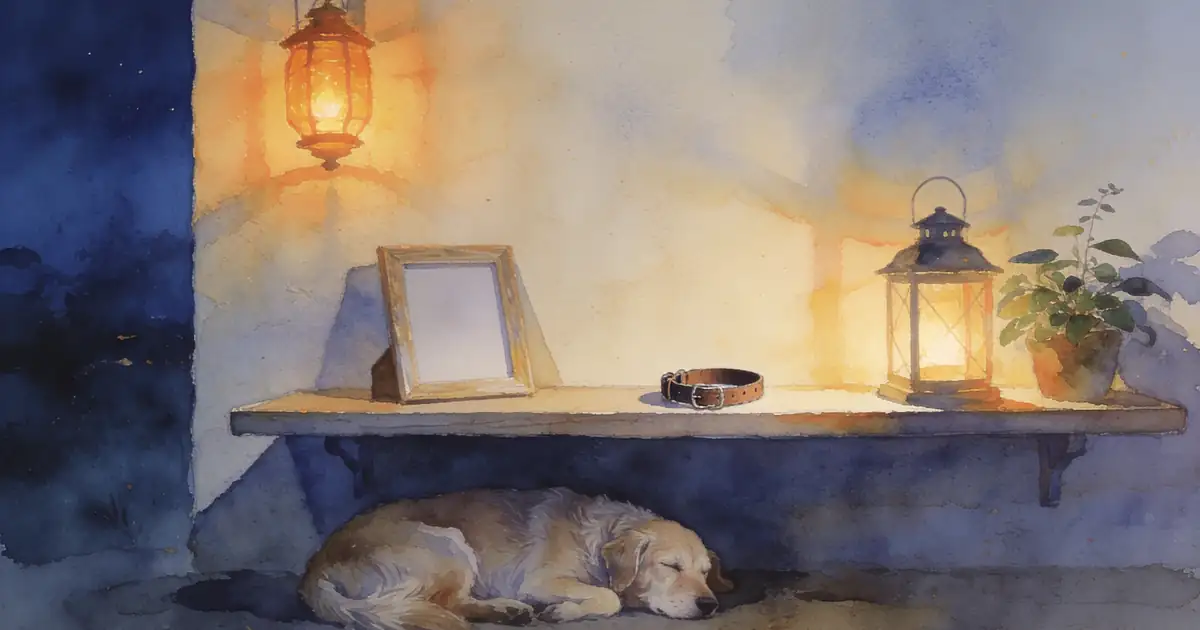
- Create a memorial shelf or corner. A photo, a candle, the collar, and the urn together form a quiet spot for remembering. See our pet memorial ideas at home for more.
If you plan to keep the ashes at home long-term, store them somewhere dry, away from direct sun and humidity, and make a note of what the container holds so that someone else would know it in the future.
Option 2: Scatter them somewhere meaningful
A favorite park, a hiking trail, a beach, or the backyard can be a good place to let go.
Before you scatter, check the rules. Regulations vary a great deal by location. Many public parks, beaches and bodies of water have specific rules, and private land requires the owner's permission. If you are not sure, call the local parks office or land manager and ask. It is a simple call, and it protects you from awkward surprises.
Practical tips:
- Choose a calm day. Wind can blow ashes back toward you.
- Scatter low to the ground, close to the earth.
- Consider keeping a small portion at home, and scattering the rest.
- Think about the place: will you want to visit it later? Will it stay accessible?
- You can make it a small ceremony: read a few words, tell a favorite story, or simply stand in quiet.
Option 3: Bury them
Burying ashes at home or in a meaningful place can create a lasting spot for remembering.
- In the garden or yard. If you own the property, burying ashes is generally a simple matter, though rules can differ depending on where you live, so check your local regulations if you are unsure. If you rent or may move, think about whether you would want to leave the ashes behind.
- In a pet cemetery. Many pet cemeteries offer burial of urns and have a plot or garden. They typically charge fees, so ask for the full cost in writing.
- In a biodegradable urn. These are designed to break down in soil, and some are made to accompany a seed or tree sapling. Follow the product's directions closely.
A note on plants. Cremated remains can be alkaline and salty, and mixing them directly into soil may harm a plant instead of nourishing it. If you want a living memorial, use a product designed for the purpose, or place the ashes in a container beneath or beside the plant rather than pouring them directly around the roots. If you are not sure, ask a local nursery for guidance.
Option 4: Keep a small portion in jewelry or keepsakes
Many people choose a small amount of ashes, or a lock of fur, in a pendant, ring or locket. Some companies also make small keepsake urns, often called "keepsakes," that hold a spoonful.
If you are considering this:
- Compare several makers and read policies on how they handle your pet's remains.
- Ask about shipping and handling. You should not need to mail ashes unless you choose to, and reputable businesses explain the process clearly.
- Be wary of any company that makes big promises or pressures you to decide quickly.
- Make sure the piece has a secure closure. Small chambers should seal well.
Option 5: Turn them into art or another memorial object
Some artists and companies incorporate a small amount of ashes into glass, ceramics, painting or other objects. Prices range widely, and quality does as well. If this appeals to you:
- Look at examples of finished work, and read reviews from other customers.
- Ask exactly what portion of the ashes will be used, how long it takes, and what the return policy is.
- Consider whether you would want to know how your pet's remains are handled, and choose accordingly.
Not everyone wants to use ashes in an artwork. Another route is to choose a keepsake that does not involve the ashes at all. A framed print, an ornament or a favorite photograph can be a place for your love to land, without needing to alter the ashes themselves. (Our own shop, Evermore Paw Co, sells memorial prints and ornaments for people who prefer that. They are ready-made designs, not personalized pieces, and entirely optional.)
Option 6: Share them, or divide them
In a family with many people who loved the pet, dividing the ashes can feel right. A small container for each household, or for each family member, is possible. A small funnel and a few small urns make this easy. This can be a good moment to share stories, too.
Option 7: Keep them with you for later
Some people plan to be buried or scattered with their pet someday, or to move the ashes to a new home. If you may relocate, a portable urn or a box you can pack carefully gives you flexibility. Travel rules for carrying ashes, especially by air, can be specific, so check with the airline or transport authority in advance and carry any paperwork you were given.
Questions to ask yourself
If you are stuck, a few questions can help:
- Where would my pet have been happiest? A favorite spot is often a good starting point.
- Will I want to visit? A burial place or garden you can return to gives you somewhere to go. A scattering may feel more freeing.
- Do I want to keep part of them close? A small portion in a keepsake and the rest in a place may feel balanced.
- Am I planning to move? If so, think about portability.
- Do I feel ready? If not, wait. There is no hurry.
What about the cost?
Expect a range. A basic container may be included in the cremation cost, while urns, jewelry and art vary widely. A meaningful memorial does not need to be expensive. A shelf, a photo and a candle can mean as much as a custom piece. Set a budget that feels comfortable, and do not feel pressured to spend more in the name of love.
If you feel stuck or sad when you see the box
Seeing the urn can bring the loss back sharply, especially in the first weeks. It is okay to put it in a drawer or a quiet room for a while. It is also okay to talk to it. If you feel overwhelmed, our guides to coping after losing a dog and losing a cat may help, and a counselor can support you if grief becomes too heavy.
There is no wrong choice
Whatever you decide, you are not abandoning your pet or choosing incorrectly. You are making a choice out of love, with the information and energy you have today. If you change your mind later, that is normal too.
This article offers general information and comfort. It is not veterinary, medical or mental health advice. See our disclaimer.
Related reading
Memorials and keepsakes
21 Pet Memorial Ideas You Can Do at Home (Many Cost Almost Nothing)
Simple, heartfelt ways to remember a dog, cat or other pet at home, from a memory shelf and paw print keepsakes to planting a garden, writing a letter or holding a small ceremony.
Coping with grief
How to Cope With Losing a Cat: Gentle Guidance for the Quiet Grief
Losing a cat leaves a quiet kind of grief. Learn what you may feel, why guilt is so common, how to look after yourself and your other pets, and ways to remember your cat.
Coping with grief
How to Cope After Losing a Dog: What Helps in the First Days, Weeks and Months
Losing a dog can feel like losing a family member, because it is. A compassionate guide to what grief can look like and what helps, from the first night to the months after.