How to Cope After Losing a Dog: What Helps in the First Days, Weeks and Months
In this article
- Your grief is real, and it makes sense
- The first day or two
- The first weeks: small routines that help
- Guilt: the heaviest guest
- If you have other pets, or children
- Grieving at work and around people who do not understand
- When to ask for more help
- What about getting another dog?
- Ways to honor your dog when you are ready
- One last thing
If your dog has died, you may be reading this at an odd hour, with swollen eyes and a house that feels wrong. First, I am sorry. Whatever the circumstances, whether it was sudden or a long goodbye, you have lost a companion who was part of your every day.
Nothing here will take the pain away, and we will not pretend otherwise. But grief is easier to carry when you know what is normal, and when you have a few small things to hold onto. This guide covers what people commonly experience after losing a dog and what tends to help.
Your grief is real, and it makes sense
A dog is not "just" anything. A dog is the one who knows your routine better than you do, who hears your car in the driveway, who lies near you on the worst days. When a dog dies, you lose the companionship, but you also lose the structure of your day: the morning walk, the dinner schedule, the greeting at the door.
That is why the grief can feel physical and disorienting. It is common to feel:
- Waves of sadness that arrive without warning, sometimes triggered by a leash on a hook or a squeaky toy under the couch.
- Numbness, as if it has not sunk in yet.
- Guilt, replaying decisions about treatment, timing or what you might have noticed.
- Irritability, trouble concentrating or difficulty sleeping.
- A feeling of hearing the dog, or glancing at the spot where they slept, out of habit.
- Loneliness, especially if the dog was your main companion.
None of these is a sign that you are doing grief wrong. There is no correct timeline and no required sequence. Some people cry for days. Others feel little for a week and then are caught off guard. Both are normal.
The first day or two
In the first hours, you do not need a plan for healing. You need to get through. A few things that help:
Let yourself stop. If you can, take time away from obligations. If you cannot, give yourself permission to do only what is necessary.
Eat something and drink water. Grief is exhausting, and it is easy to forget the basics.
Tell one person. You do not have to announce it to everyone. Choose someone who understood what your dog meant to you and let them know.
Handle the practical decisions when you are ready. If your dog died at home or you are waiting to decide about cremation or burial, your veterinarian's office can usually guide you through the options and the local rules. If you are not ready to decide about collars, bowls and beds, leave them where they are. There is no deadline for putting things away.
The first weeks: small routines that help
Keep the structure you can. The hours when you would have walked your dog may feel especially empty. Some people find it helps to replace that time with a walk of their own, even a short one. Others find the walk too painful for a while and prefer to stay in, and that is okay too.
Move your body gently. A short walk, a stretch or time outside does not cure grief, but it can ease the tension that builds up in the body.
Talk about your dog. Tell stories. Look at photos. Many people feel pressure to stop mentioning their pet after a few days. If friends are not good listeners on this topic, look for someone who is, or consider an organized pet loss group. The Association for Pet Loss and Bereavement (aplb.org) offers free support resources and a chat room, and the UK charity Blue Cross runs a pet bereavement support service.
Write it down. You do not need to be a writer. A few lines about a favorite memory, or a letter to your dog, can help you put into words what is otherwise a tangle. Try starting with: "The thing I will miss most is..."
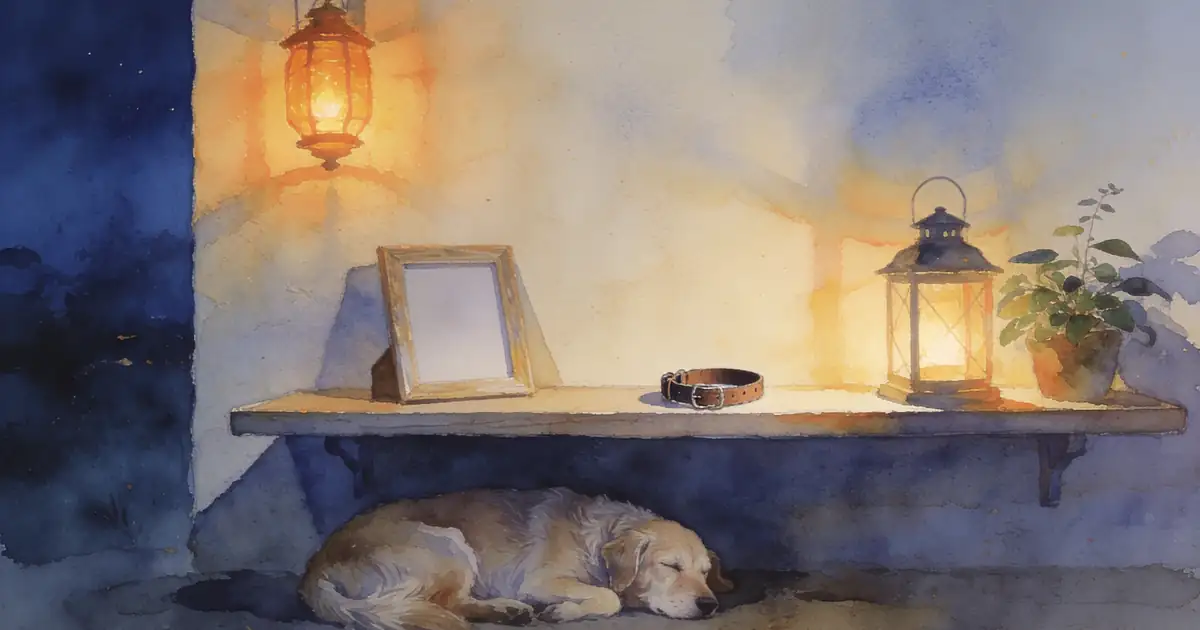
Make a small place for remembering. A framed photo, a candle you light in the evening, or a shelf with the collar and a favorite toy gives your grief somewhere to go. If you want ideas, see our list of pet memorial ideas you can do at home.
Guilt: the heaviest guest
Almost everyone who loses a pet asks "what if." What if I had taken them in sooner, what if I had chosen differently, what if I had been home. Guilt is often the mind's way of searching for control in a situation that felt out of control.
It can help to remember that you made decisions with the information you had at the time, out of care for your dog. If you chose euthanasia, you were choosing to prevent suffering, which is a loving act even when it breaks your heart. If you are struggling to forgive yourself, it can help to say it aloud to someone, or to write down what you would say to a friend in your position. You would probably be much kinder to them than you are being to yourself.
If you have other pets, or children
Other animals in the home may notice that something has changed. They may be quieter than usual, search for the missing dog, or seem clingy. Keeping their routines steady and giving them a little extra attention is usually the best you can do. If a surviving pet stops eating, seems unwell, or the change lasts, call your veterinarian, because those changes can have medical causes.
If you have children, honesty and simple language work best. We wrote a separate guide on how to explain pet loss to a child.
Grieving at work and around people who do not understand
Pet loss is sometimes called "disenfranchised grief," meaning grief that others do not fully acknowledge. You may feel pressure to be fine by Monday. If you can, take a day or two. If you cannot, you can say something short like, "My dog died this week, so I am a bit off. I appreciate your patience." You do not owe anyone a full explanation.
When to ask for more help
Grief is not an illness, and most people move through it without professional help. But it is okay to ask for support, and it is wise to do so if:
- Your sadness is getting heavier rather than lighter over a long period and is interfering with work, eating, sleeping or caring for yourself or others.
- You feel hopeless, or have thoughts of harming yourself. If so, please reach out right away. In the United States you can call or text 988 to reach the Suicide & Crisis Lifeline; if you are elsewhere, contact your local emergency number or crisis service.
- You were already living with depression or anxiety, and this loss has made things much harder.
A doctor, counselor or therapist can help, and many have experience with pet loss.
What about getting another dog?
There is no right answer, and no waiting period that works for everyone. Some people welcome a new dog within weeks. Others need a year or more. A new dog does not replace the one you lost, and you do not owe anyone an explanation either way. If you are unsure, it can help to ask yourself whether you want a new companion for their own sake, or whether you are trying to fill the quiet. Both are understandable, and the first tends to be an easier foundation for a new relationship.
Ways to honor your dog when you are ready
Remembering your dog does not mean staying in pain. It can be a way of carrying them with you. Some ideas people find comforting:
- Frame a favorite photograph or make a small photo album.
- Plant something in the yard or a pot on the porch.
- Make a donation to a shelter or rescue in your dog's name, if that feels right.
- Keep a piece of their routine alive, such as a walk on their favorite route on their birthday.
- Choose a keepsake for your home. Some people like a simple print or an ornament; our own shop, Evermore Paw Co, has gentle memorial posters and canvas prints and ornaments for people who want something like that. There is no pressure to buy anything, and plenty of meaningful keepsakes cost nothing at all.
One last thing
The depth of your grief is the measure of your love. It will not always feel as sharp as it does now. Over time, many people find that the sadness softens and the memories begin to bring warmth alongside the ache. Until then, be as patient with yourself as you were with your dog.
This article offers general information and comfort. It is not veterinary, medical or mental health advice. See our disclaimer.
Related reading

Coping with grief
How to Cope With Losing a Cat: Gentle Guidance for the Quiet Grief
Losing a cat leaves a quiet kind of grief. Learn what you may feel, why guilt is so common, how to look after yourself and your other pets, and ways to remember your cat.
Memorials and keepsakes
21 Pet Memorial Ideas You Can Do at Home (Many Cost Almost Nothing)
Simple, heartfelt ways to remember a dog, cat or other pet at home, from a memory shelf and paw print keepsakes to planting a garden, writing a letter or holding a small ceremony.

Supporting someone else
What to Write in a Pet Sympathy Card: 25 Gentle Messages and How to Choose
Not sure what to write in a pet sympathy card? Find gentle, original message ideas for a dog, cat or other pet, plus simple tips on tone, length and what to avoid.