DIY Pet Paw Print Keepsake Ideas: Ink, Clay, Salt Dough and More
In this article
A paw print is one of the most beloved small keepsakes: a real, one-of-a-kind mark of the animal you love. It can sit in a frame, hang on a wall, or be tucked into a memory box. And you do not need special skills to make one.
This guide covers ways to make a paw print at home, both with a pet who is still with you and, gently, after they have passed. It also covers materials, safety, and ideas for displaying your keepsake.
Why a paw print matters
Photographs capture how a pet looked. A paw print captures a small piece of the pet themselves: the size, the shape, the pads. Many people find it deeply comforting. If your pet is aging or ill, making a print while you can is a gentle way to prepare. If your pet has already died, there are still gentle options, which we cover below.
A few notes before you begin
- Choose a calm time. Pets are more cooperative when relaxed, after a walk or a meal.
- Use pet-safe materials. Look for non-toxic, water-based, pet-safe ink pads, labeled as safe for pets. Do not use craft paints or markers that may be harmful if licked.
- Keep it short and positive. Reward your pet with treats and praise, and stop if they are distressed.
- Have wipes ready. Clean paws gently with a damp cloth or pet-safe wipe right away.
- Do not force it. If your pet does not want to take part, take a break or try a different method.
Method 1: Ink on paper (the simplest)
What you need: a pet-safe ink pad, good-quality paper or card, a damp cloth, treats.
- Place the paper on a flat, stable surface, with a towel or soft mat under it for cushioning.
- Gently press your pet's paw onto the ink pad, then onto the paper. Press the pads and toes without pushing too hard.
- Lift straight up to avoid smudges.
- Wipe the paw clean immediately.
- Try a few prints and pick the best.
Tips: Dry paws and light pressure give crisper prints. Cats tend to prefer a quick press; dogs may be happy to "shake." Let the print dry fully before framing.
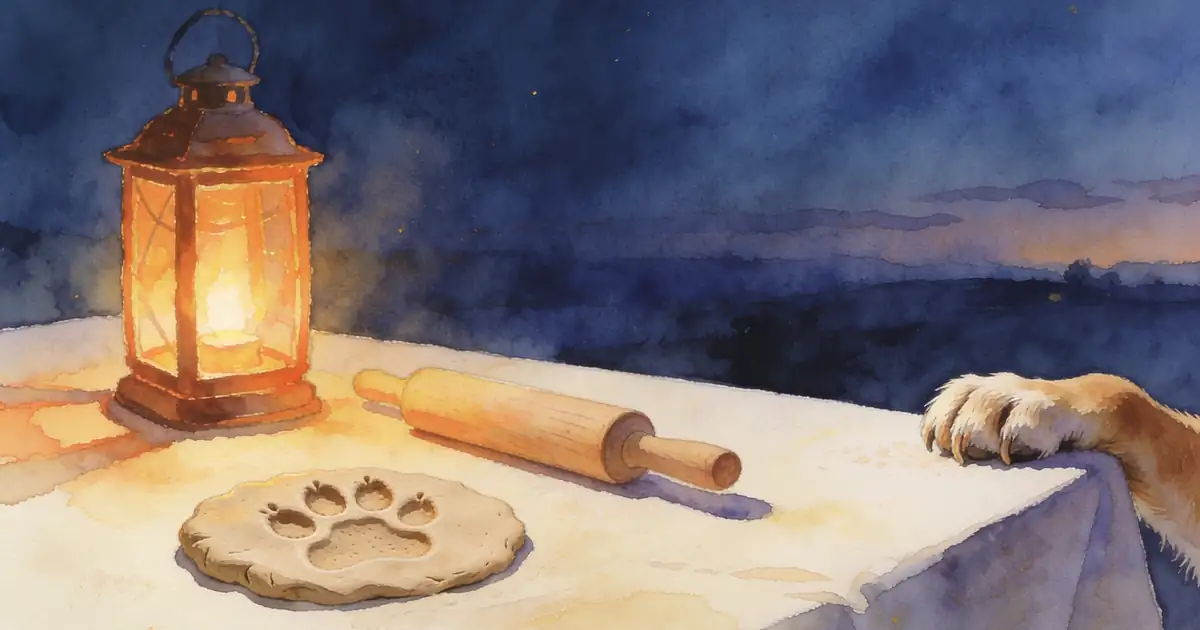
Method 2: Clay impression
What you need: air-dry or oven-bake clay (non-toxic), a rolling pin, a cookie cutter or knife, a straw for a hanging hole, a damp cloth.
- Roll the clay to about half an inch (1 cm) thick on a clean surface.
- Cut a round or heart shape, or leave it freeform.
- Gently press your pet's paw into the center, firmly enough to leave a clear impression, then lift.
- Make a hole at the top with a straw if you plan to hang it.
- Dry or bake according to the clay's instructions.
- Paint or leave natural; seal if desired.
Tip: If your pet will not press, you can press the paw lightly yourself, supporting the leg. Keep the clay out of reach of pets, as some can upset a stomach if chewed.
Method 3: Salt dough
Salt dough is inexpensive and easy but should be handled with care around pets.
Basic recipe: 2 cups plain flour, 1 cup table salt, 1 cup water. Mix to a smooth dough, add a little flour if sticky.
- Roll, cut and make a print as with clay.
- Bake at a low oven temperature (about 120 to 150°C or 250 to 300°F) until hard, usually a few hours depending on thickness. Let it cool.
- Paint or seal if desired.
Important safety note: Salt dough, raw or baked, contains a lot of salt, and eating it can be dangerous for pets. Keep all dough, tools and finished pieces well out of reach of animals. If your pet may have eaten any, contact your veterinarian right away.
Method 4: Paw print on fabric or a canvas
Use pet-safe ink and a small piece of fabric or a stretched canvas. Press, lift and let dry. You can frame it or sew it into a small cushion or tote. Wash only according to the ink's instructions.
Method 5: Nose print
A nose print is as unique as a fingerprint. Gently press a pet-safe ink pad lightly to the nose, then onto paper, or ask your vet if they can help. Many pets will not tolerate this, and that is okay.
If your pet has already passed
You may be reading this after the loss. There are still gentle options.
- Ask your veterinarian or cremation provider. Many offer a clay or ink paw print as part of aftercare, sometimes at no extra cost. If your pet is with them now, ask.
- Make an impression at home. If your pet has died at home, some people make a print in clay or with ink before the body stiffens, or after it softens again, with a calm and careful touch. If you are not sure, your veterinarian can advise you. Do not feel pressure to do this; many people find it too hard.
- Use an existing mark. A muddy paw print on an old photo, a print on a window or a nose smudge on a blanket can be photographed and printed. Photographs of the paw itself, clipped fur and the collar can be arranged into a small display.
- Make a representation. If no print exists, you can trace a photo of the paw or choose a drawn paw-print design to include in a memorial.
For the first hours after a pet dies at home, our guide to what to do when your pet dies at home lays out gentle steps.
Ways to display it
- Shadow box. Arrange the print with a collar, tag, a photo and a small note.
- Frame with a mat. A simple frame makes a lasting display. A wide mat gives a calm look.
- Ornament. Clay or salt dough prints with a ribbon can hang on a shelf, in a window, or on a tree at the holidays.
- Garden marker. Seal a clay print for outdoor use, or place the framed print inside. Outdoor display depends on the material; ask a craft store about weatherproofing.
- Memory box. Keep it with a lock of fur, a photo and a letter. See our guide to writing a goodbye letter to your pet.
- Pair it with words. Add a name, a date or a short phrase. For ideas, see what to write on a pet memorial stone or plaque.
If you would rather not make one yourself
Making a keepsake is not for everyone, and it is fine to buy something ready-made. Our shop, Evermore Paw Co, sells ornaments and mugs with paw-print designs. They are not made from your own pet's print, and they are illustrations rather than personalized items. Many people use them next to a real print or a photo.
In the end
A paw print is a small, tender record of a life shared with you. Whether it is made with ink on a kitchen table, in clay on a quiet afternoon, or sent along with ashes from a veterinary clinic, it holds a bit of the way your pet moved through the world. Keep it where you can see it, and let it be a place to pause. For more ideas, see our pet memorial ideas at home.
This article offers general information and comfort. It is not veterinary, medical or mental health advice. See our disclaimer.
Related reading
Memorials and keepsakes
21 Pet Memorial Ideas You Can Do at Home (Many Cost Almost Nothing)
Simple, heartfelt ways to remember a dog, cat or other pet at home, from a memory shelf and paw print keepsakes to planting a garden, writing a letter or holding a small ceremony.

Practical aftercare
What to Do When Your Pet Dies at Home: A Calm, Step-by-Step Guide
If your dog, cat or other pet has just died at home, here is a gentle checklist: what to do first, who to call, how to care for your pet's body, and what can wait.
Memorials and keepsakes
What to Write on a Pet Memorial Stone or Plaque: 40 Original Wording Ideas
Not sure what to engrave or paint on a pet memorial stone, plaque or marker? Find original wording ideas for dogs, cats and other pets, plus practical tips on length, materials and placement.